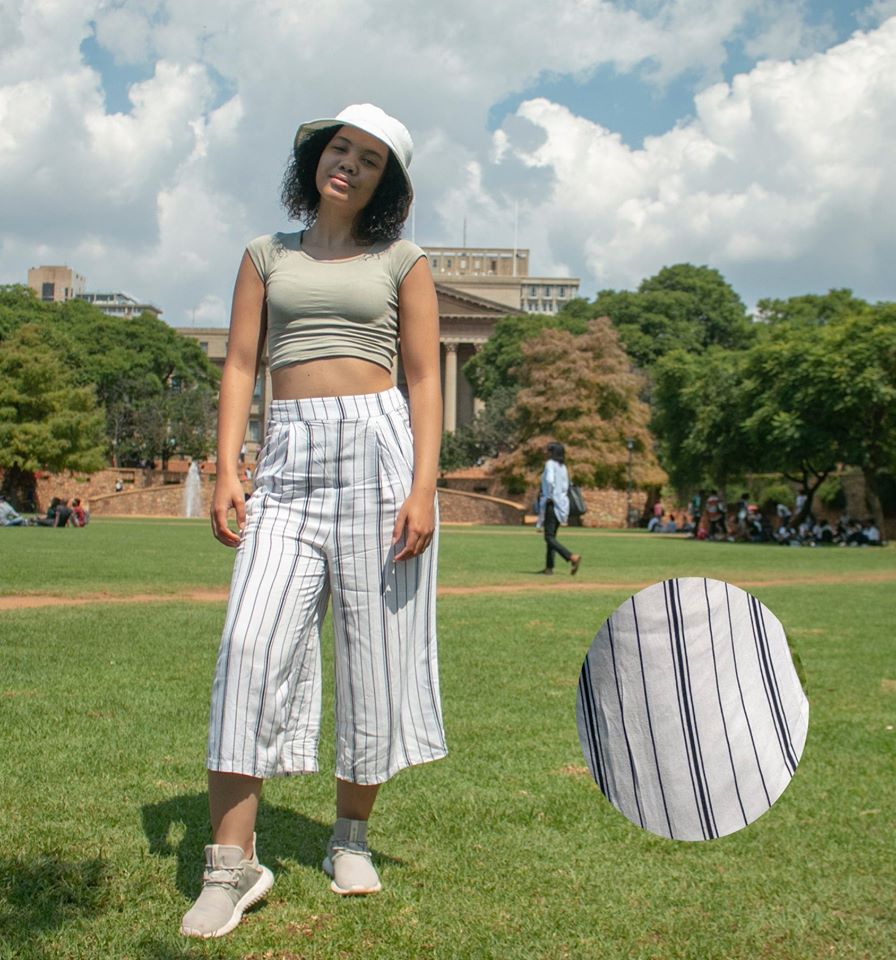
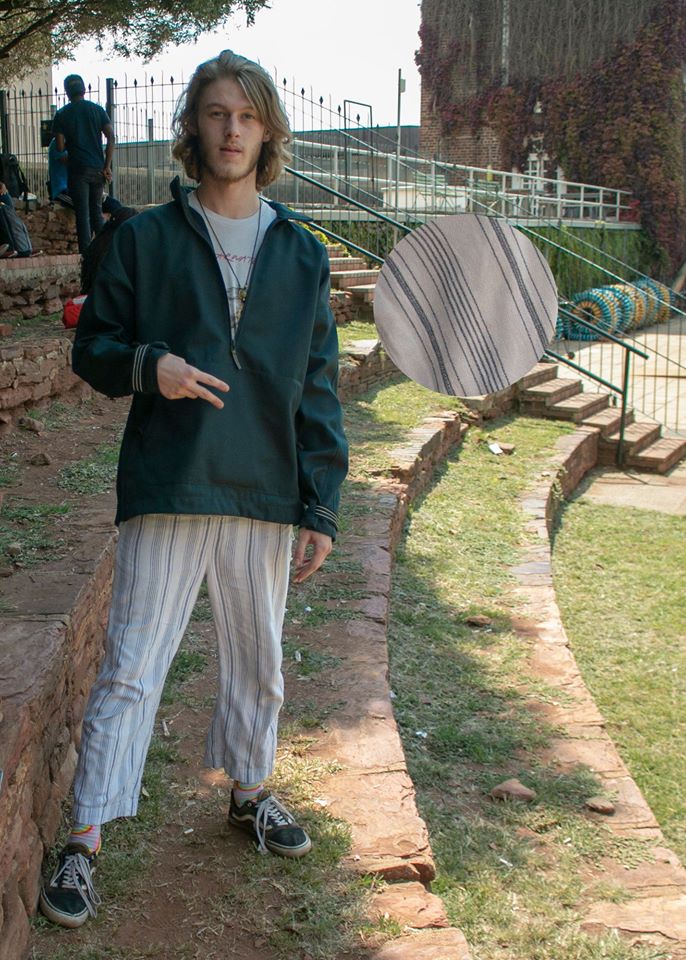
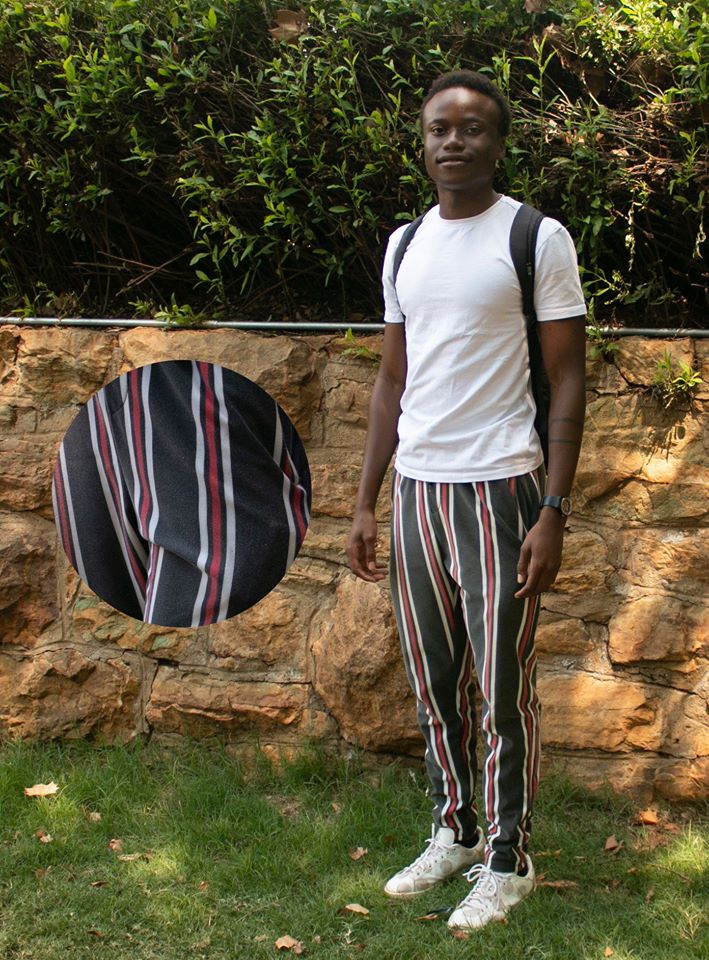
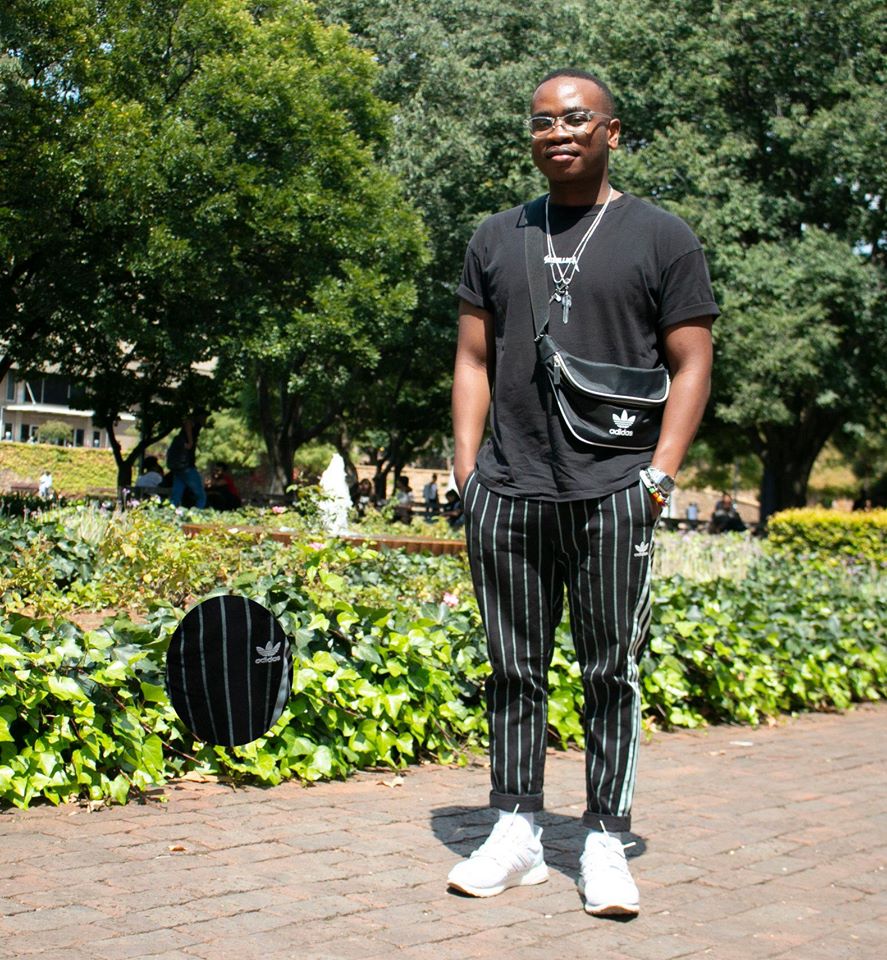
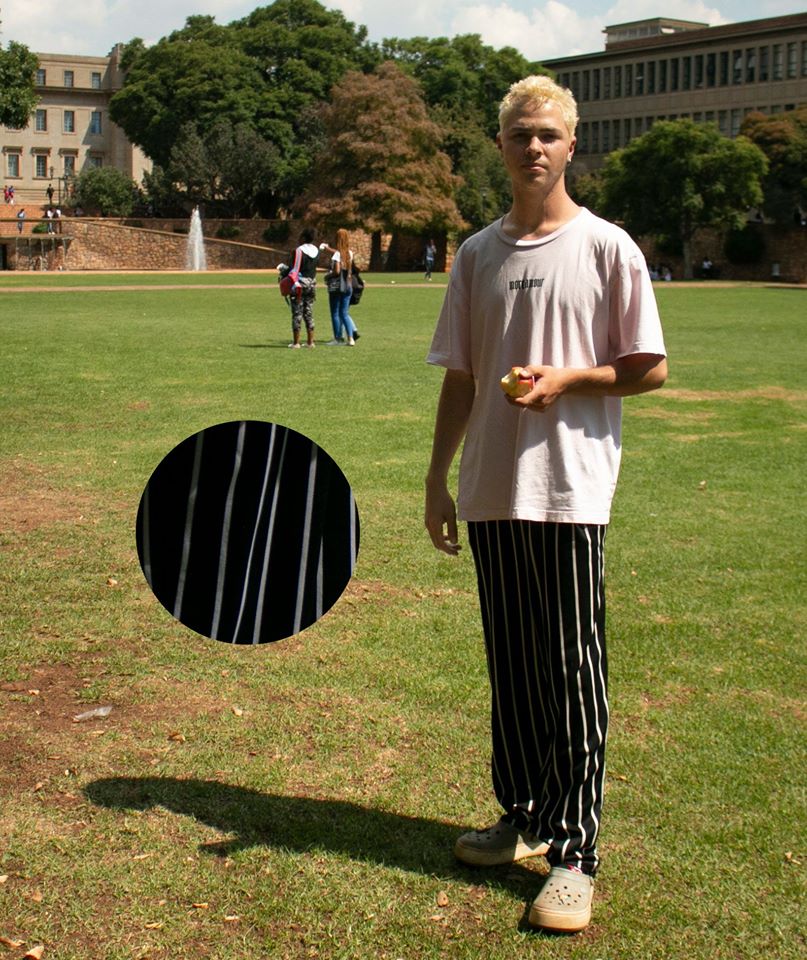
Check out this weeks drip that’s dropped with vertical striped pants around East Campus. Photos and Captions: Tshepo Thaela
Gcina Sebeko (21) is doing a Postgraduate Certificate in Education in her forth year at Wits. She said she donned her bright bottoms because “It felt like a sunny day and I woke up very happy. It was my mom’s birthdy yesterday.”
Where’d you get your drip from Gcina? #IGotItFromMyMamaCaslian Isaacs (19) is in her first year of a BA in Media Studies and International Relations. She wore her bright white longs because she “wanted to feel free today.” She went on to say “The pants are super loose and its almost like a skirt and I like that” Feel free to keep dropping that drip.Elias Judin (20) is in his second-year of BSc Computer Science and Applied Math. He called his pants “pajama pants” and described them as “super chilled, man.” The way you imagined he said it, is exactly the way he did.Musa Mathebula (19) is in his first year of BSc Biological Science and sported these sweatpants for an exam, “I just wore them because they’re comfortable and I am writing” he said. If the exam was on drip, 10/10 for the lad.Karabo Rampai (23) might be in his first year of LLB but he looks like he has a PhD in DRIP (He doesn’t though, we asked). When asked why he dripped so hard, he answered casually “It’s an average day, let me just put [on] an all black ensemble and why not?” The drip he dropped was so hard that his friends couldn’t contain themselves.Kaydon Minnaar (18), a first-year BA Fine Art student makes his drip look so effortless. When asked why he dropped this drip, he answered “Just because. It was a morning move” #IWokeUpLikeThis
Netflix’s latest commissioned South African series looks and feels great but is not an unqualified success.
SPOILERS AHEAD
Blood and Water is Netflix’s second commissioned South African series. The six-episode, high-school drama, directed by Nosipho Dumisa, shows the quality that South Africa has to offer when it come to clever camera movement and fresh characters. However, a few consistency errors and gaps in the plot undermine this quality to an extent.
Sixteen-year-old Puleng Khumalo (Ama Qamata) transfers to the prestigious fictional school Parkhurst College to find out if their swimming star, Fikile ‘Fiks’ Bhele (Khosi Ngema), is her long-lost sister who was abducted at birth.
The camera work is thoughtful and creative. As illustrated in the opening scene where Puleng is shown with the camera initially upside down and turned right side up. This seems to reflect the state of Puleng’s family when we first meet her. She and her family are gloomily celebrating the 17th birthday of her sister who was abducted at birth, and to top it off, her father, Julius, is later arrested for child trafficking.
The characters are refreshing South African adaptations of common teen drama archetypes. Puleng has a strong will and determination to solve the mystery of her kidnapped sister that may also uncover a child trafficking syndicate. She is much like other fictional female teen detectives like Nancy Drew and Veronica Mars who get wrapped up in high stakes crime cases.
Characters such as Fiks’s friend, Chris Ackerman (Arno Greeff), illustrate that the adaptation of archetypes is done in the name of representation. In any other teen drama, he’d be the attractive male lead who gets the girl in the end. That image is subverted in the very first episode when we find out he’s pansexual and not even as good a swimmer as Fiks.
NOW YELLOW, NOW BLACK: Blood and Water makes an amateurish error with hockey sticks. Photos: Provided
The show is not without fault though. The blatant consistency errors detract from the professionalism of the work. For example, when Puleng’s love interest, Karabo ‘KB’ Molapo (Thabang Molaba), quotes rapper Nasty C. The rapper then appears as a different character later on in the show. In another scene, Puleng is talking to her friend Zama (Cindy Mahlangu) and Zama is holding a hockey stick. The stick magically changes colour from yellow to black and back to yellow in the middle of the scene.
The plot also leaves significant loose ends by the time we get to the end. Firstly we aren’t given conclusive enough evidence that Fiks is Puleng’s sister after Puleng spends a lot of time trying to conduct a DNA test but then the test is stolen in a house robbery. The ‘evidence’ offered at the end is based around a fraudulent birth certificate, however, the contradictory nature of the evidence undermines the solving of the mystery.
All in all, the show was enjoyable and refreshing but the plot got a little too ambitious at times and left holes in the end. This would be a great watch for South African teens because of how familiar it feels.
Vuvu Rating 6.5/10
FEATURED IMAGE: Netflix series Blood and Water premiered on May 20. Photo: Provided
SAUJS campaign, #SupportAWitsie, has donated food and sanitary supplies to 165 international students living in Wits residences.
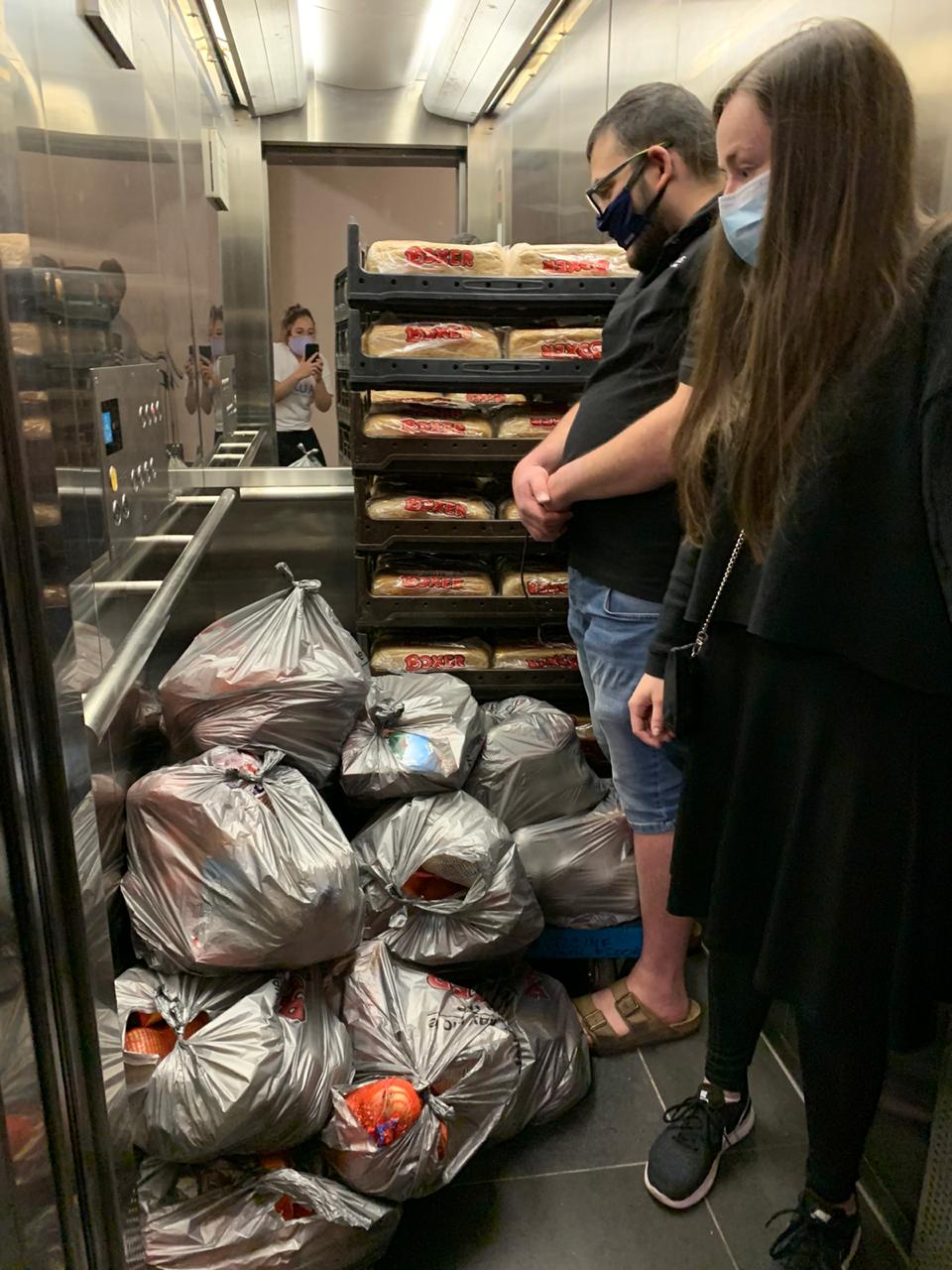
Parcels of food and sanitary supplies were donated to Wits University students currently living in residence on Monday, May 18. The donation was part of the #SupportAWitsie campaign which was launched at the end of April by the South African Union of Jewish Students (SAUJS) at Wits.
“We decided that before we go to outside communities, we make sure that our community is helped,” said Wits SAUJS chairperson Gabriella Faber (21).
According to Faber, SAUJS handed out 165 parcels to students staying at Yale Village and Wit Junction. The parcels included, among other items, 2 loaves of bread, mielie meal, baked beans, toothpaste and sanitary pads.
“86 students remained on campus when the decision was made to close residences in response to COVID-19. These are mainly international students who were unable to travel home,” said Wits Dean of Students, Jerome September. September said, “With the return of final year medical students, an additional 95 students are now in on-campus residences.”
According to September, the Wits Citizenship and Community Outreach (WCCO), has partnered up with organisations like Gift of the Givers, Tiger Brands and the Celebration Church to provide food support to the students in res. “The support is extended beyond students on campus, and also to those students who have required assistance in the Braamfontein area,” said September. Faber said September assisted in identifying how the students in res could be assisted.
Epidemiology masters student, Godwin Kalu (29) who is staying at Yale Village, told Wits Vuvuzela that, “students at Yale Village have been provided with hampers or food items, which has been quite helpful to students.”
Faber said SAUJS were inspired by the Community Action Network (CAN) initiatives operating in local communities which have assisted in relieving hunger across the city.
“I don’t see this as an act of kindness but more of an obligation. If we’re privileged enough to have enough resources to help, we have an obligation to help,” she said.
Although Cyril Ramaphosa’s eyes were covered by his mask blunder, the president had vision.
On Thursday evening, with the eyes of the entire country on him, President Cyril Ramaphosa produced a moment of meme magic, when he struggled to put on his face mask at the end of his address to the nation.
To close off his address, Ramaphosa attempted to put on the mask in a very unconventional manner. First, struggling to secure his ears while his mask was over his eyes, then unhooking it when he tried to put it over his mouth and eventually getting it on after a very awkward struggle.
Needless to say, social media was flooded with pictures and videos of the president’s blunder, which had become the country’s latest meme. The hashtag #CyrilMaskChallenge was even trending on twitter for most of Friday.
While some on social media came to the president’s defence saying that his mask mishap happened because he was tired, stressed, and overworked, I am not convinced by this explanation. That mask was obviously too small and there was no need for him to put on the mask in front of the camera.
A more convincing explanation is that this blunder was deliberate.
President Ramaphosa is aware of activity on social media posts he’s involved in. Consider the lead up to his address on Tuesday, when his usual address opening was trending on Twitter (#MyFellowSouthAfricans). In response, Ramaphosa opened his address with “Compatriots” instead. Because the term is defined as “a fellow citizen or national of a country,” this can be seen as a cheeky nod to the hashtag. Subtle comedy gold if you ask me.
Ramaphosa appeared on eNCA on Friday, and took the mask mishap in his stride when he joked saying: “For those that were laughing at me yesterday, now, let me tell you something… I am going to open a TV channel where I am going to teach people to put on a mask.”
You may be asking why our president would want to embarrass himself in front of the whole country. The answer is simple.
The lockdown has been an undeniably difficult time for everyone in the country. Social distancing has left many feeling isolated and under the weather. Memes are a little relief that we can enjoy and share.
At a time when unity is our best chance at beating the pandemic, President Ramaphosa’s cringeworthy and dad-jokeish attempt to put on a mask was the tonic the country needed. The effect is captured best by this meme caption: “In this moment, the nation was united in its confusion.”
Finance and international relations classes were caught exchanging answers via WhatsApp groups and email.
By Tshepo Thaela and Catia De Castro
Wits University is implementing new measures to ensure that students are not cheating during online assessments, as well as setting up disciplinary measures should there be instances of cheating.
Some of these stricter security measures will include honour pledges before each test, randomly selected questions from a question bank that will appear in random order and students not being able to go back to previous questions.
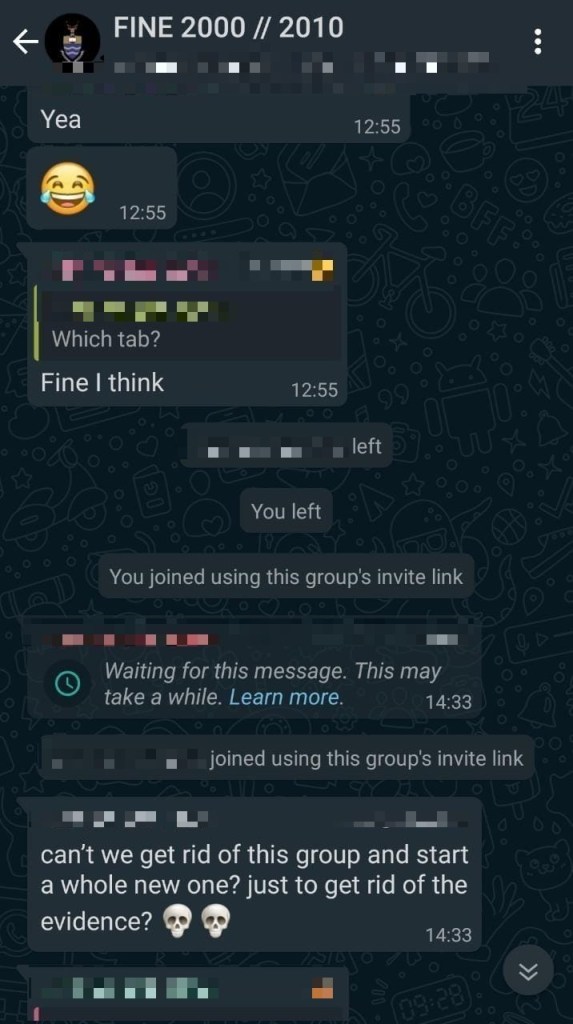
This follows recent cheating incidents at the school of economics and finance (SEF) and the department of international relations. In both courses, students were exchanging online test and assignment answers via WhatsApp groups and email.
Consequently, the students will be subject to disciplinary measures, which include receiving zero for the assessments as well as having to re-write tests. Additional disciplinary measures are yet to be fully determined.
In an email sent to Wits Vuvuzela on May 18, the SEF said that they had received “indisputable evidence of the cheating” by second-year finance students in FINE 2000 during their online test on May 6, and as such had decided to invalidate the test. “The test will thus be rescheduled at a suitable date with additional security features.
“The school is in the process of identifying the students in order to initiate disciplinary action,” the email continued.
The first-year international relations course is dealing with a similar issue. According to an email sent by INTR 1012 lecturers to students on May 16, cheating occurred in both an online test on May 12, and an assignment on May 15.
One of the guilty parties on the FINE 2000 WhatsApp group wants to bury the evidence
“All cases discovered will receive a zero and the university disciplinary process will be invoked,” read the email.
A third-year BCom general student who is repeating finance, told Wits Vuvuzela that, “I didn’t look at the group during the test, but afterward, I saw people were asking for and sending answers. The only way [the university] could find out is if someone told them.”
The move from face-to-face teaching to emergency remote teaching has drastically changed test conditions. According to Professor Diane Grayson, the senior director of academic affairs at Wits, the university has been implementing preventative measures to reduce cheating.
“Some of these include randomising questions selected automatically from a question pool, shuffling question order, requiring some assignments to be handwritten and then photographed and ensuring that students complete an assessment in one, timed sitting,” she told Wits Vuvuzela.
However, some students say there is still a lack of monitoring, which has facilitated the cheating.
A first-year international relations student who asked to remain anonymous, says that he felt unmonitored. “You can safely assume that if a student has a textbook in front of him, he’s going to use it,” he told Wits Vuvuzela.
These incidents have led to students in different courses leaving their university WhatsApp groups. Daniela Mech, a fourth-year BCom Law student, says that after the cheating incidents, people started leaving her law group out of fear that something similar could happen.
She told Wits Vuvuzela, “I don’t want to get into trouble just for being on a group.”
FEATURED IMAGE: Cheating is the latest threat to online assessments at Wits. Photo: Tshepo Thaela
“After all the work I put into training and raising the funds, I felt like I was robbed of my international debut again.”
Second-year BSc Computer Science student, Benefactor Mokoena (21), plays Ultimate Frisbee for the Wits Ultimate Frisbee Club. He was selected to represent the South African Men’s National team (Mambas) at the World Flying Disc Federation (WFDF) 2020 World Ultimate and Guts Championships in Leeuwarden, Netherlands that was due to take place between July 11 and 18.
Unfortunately, for Mokoena, his international aspirations were hindered by the global covid-19 pandemic, which has caused the cancelation and postponement of various sporting events all around the world.
Mokoena shares with Wits Vuvuzela, how he preparedand got excited for his international debut, as well as how the pandemic all but dashed his international dreams.
As told to Tshepo Thaela
I started playing frisbee for the Wits Kudus in 2018. I stumbled across it at the Walter Milton Oval [on Wits Main campus] and saw people throwing what looked like a plate. Everyone was welcoming and keen to teach me the game. At our first team meeting, the captain at the time, Paul Nussey, told us about the opportunity that frisbee offered, to represent South Africa internationally. “Imagine representing South Africa at Worlds in a sport where you throw a plate,” he said and mentioned some teammates that had already done that. That’s when I first set the goal to represent South Africa with the u/24 (Wild Dogs) team.
I spent the whole of 2018 preparing for the first round of Wild Dogs trials that would take place at the end of the year. I would always spend extra time after practice, working on my throws and improving myself as a frisbee player. Eventually, I tried out for the team and unfortunately, I didn’t get selected. That was heart-breaking. I felt that the selection process wasn’t fair because there were some people that were selected that I knew I could outperform. It was difficult coming back to frisbee, but I wanted to prove a point. I was worthy of playing for my country.
The trials for the South African Men’s team (Mambas) were posted on the Wits frisbee Whatsapp group in late 2019. I saw this as an opportunity to set new goals. This time around, the coach was someone that had coached me before, so I knew he was aware of my potential. I tried out and made the Mambas team, which felt great. It felt good to achieve finally reach the goal I had set around 2 years ago.
Although I was celebrating, work wasn’t over. I had to find a sponsor for the R32 000 required to cover the expenses of the of travel for the tournament in mid-July and the training camp to Cape Town on March 14 and 15. I managed to find someone to sponsor half of the fees, but only if I could come up with the other half. I raised R8000 before the training camp was cancelled as the first cases of covid-19 in South Africa were reported and domestic travel stopped.
The team received the announcement from the WFDF which said that the tournament would be “postponed/cancelled”. It was devastating. After all the work I had put into training and raising the funds, I felt like I had been robbed of my international debut. As we speak, my team and I are still waiting for communication from the WFDF about whether the tournament is going to be postponed or officially canceled.
In the unlikely scenario of the tournament going ahead, I’d like to make sure that I’ll be in the best condition to play. I’m still keeping fit with morning jogs and home workouts like push-ups, sit-ups and crunches. I want to make sure that I am ready for action when an opportunity comes knocking at my door again.
FEATURED IMAGE: Benefactor Mokoena representing the Wits Ultimate Frisbee team at the South African Nationals tournament in 2019. PHOTO: Tshepo Thaela
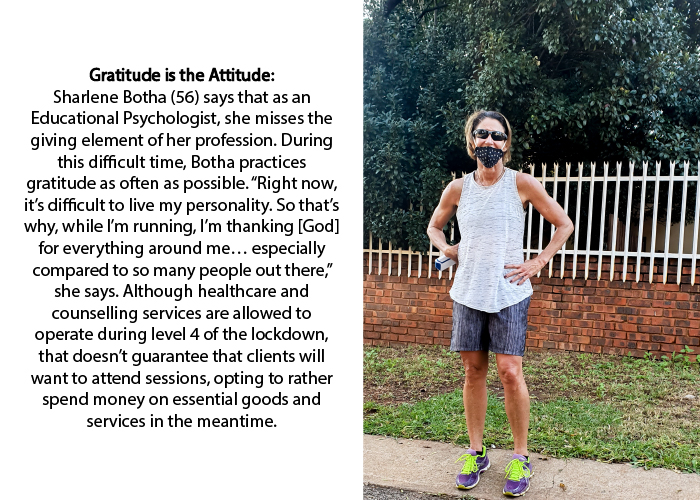
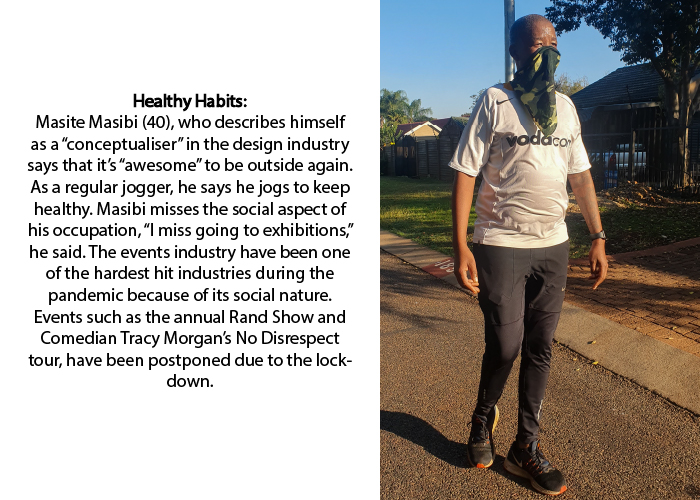
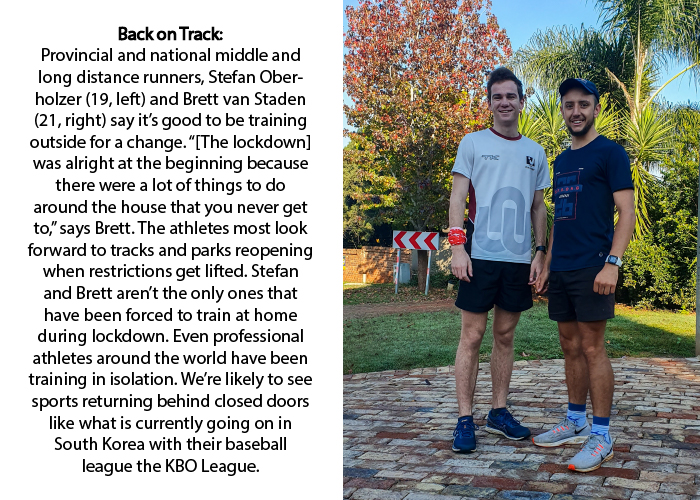
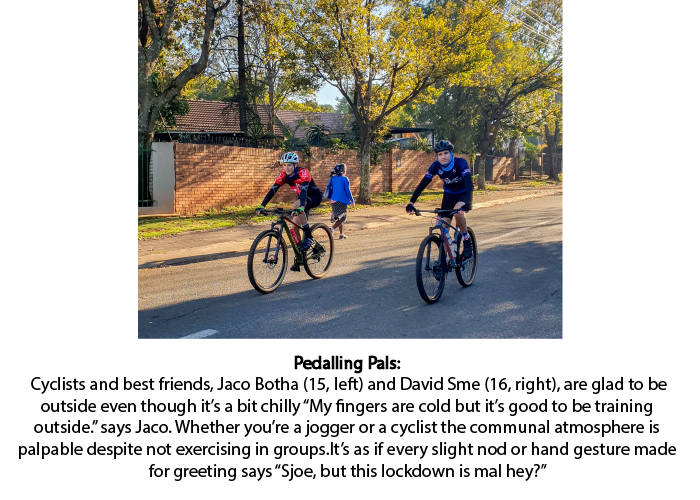
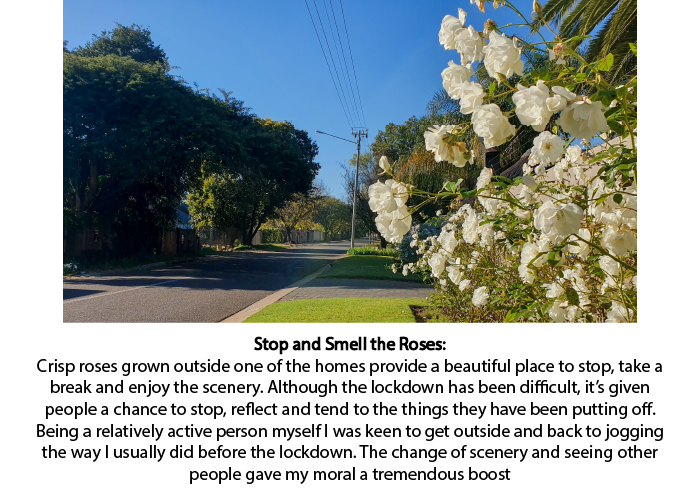
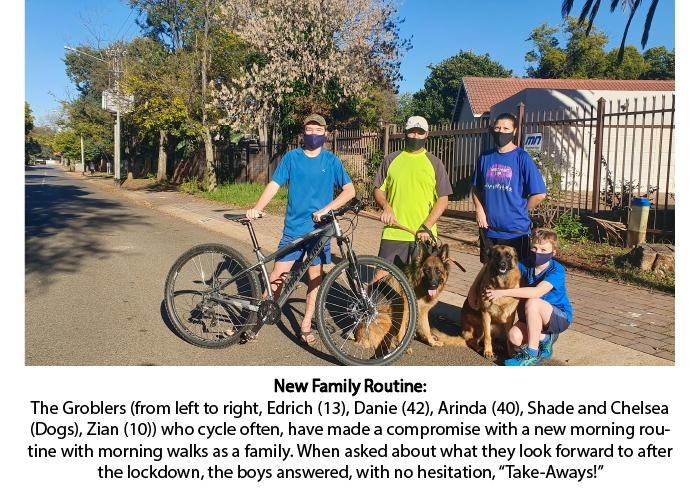
It’s been almost a week since South Africa moved to level 4 of the lockdown which has allowed people to exercise outside of their homes, within a 5km radius, between 6 and 9 in the morning. Wits Vuvuzela student journalist Tshepo Thaela meets some of the enthusiastic runners, cyclists and walkers of Wierda Park in Centurion.
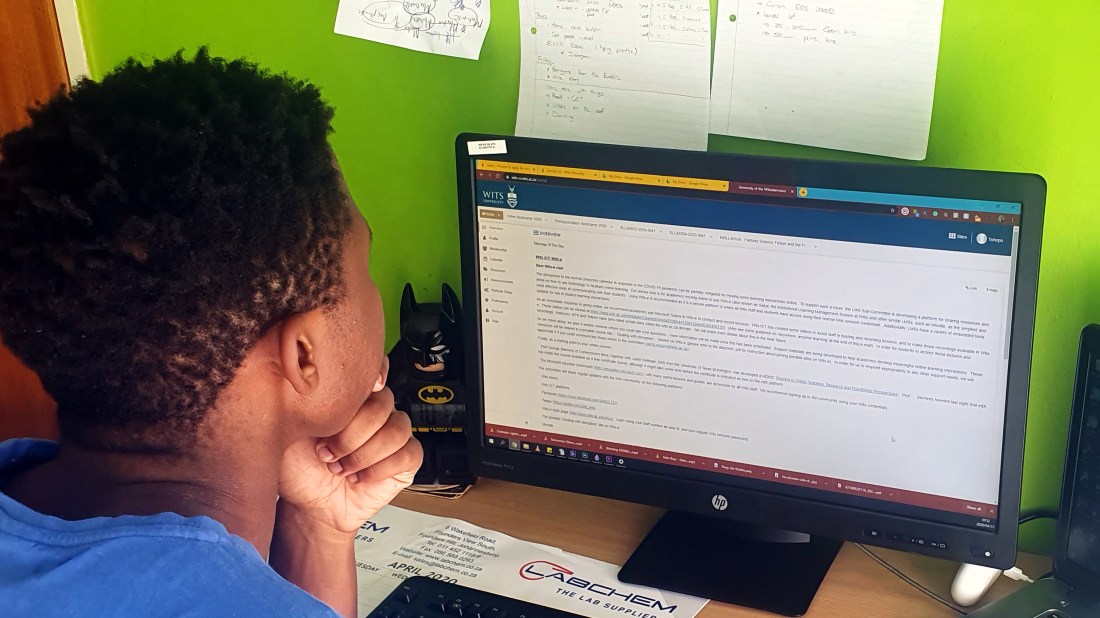
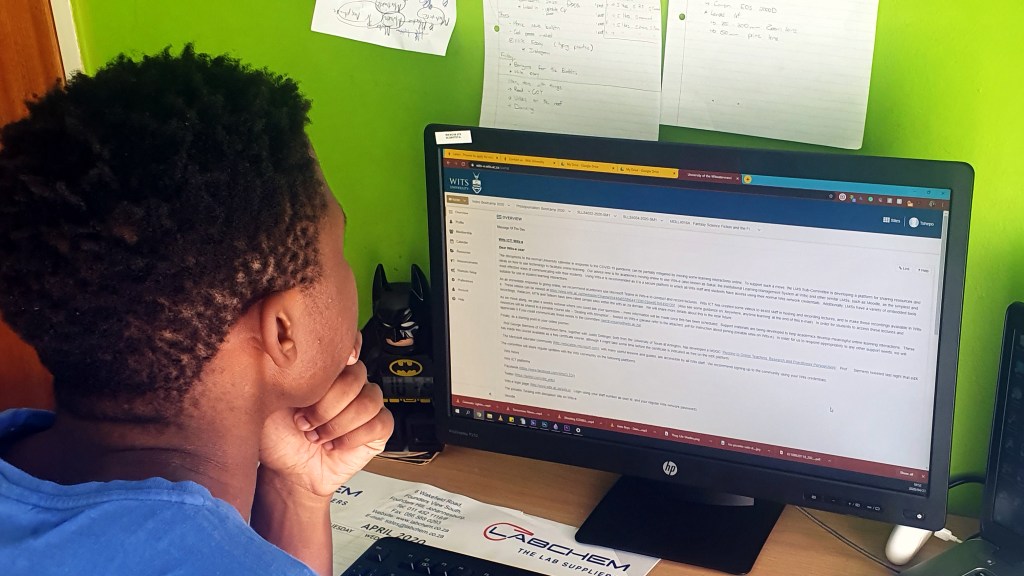
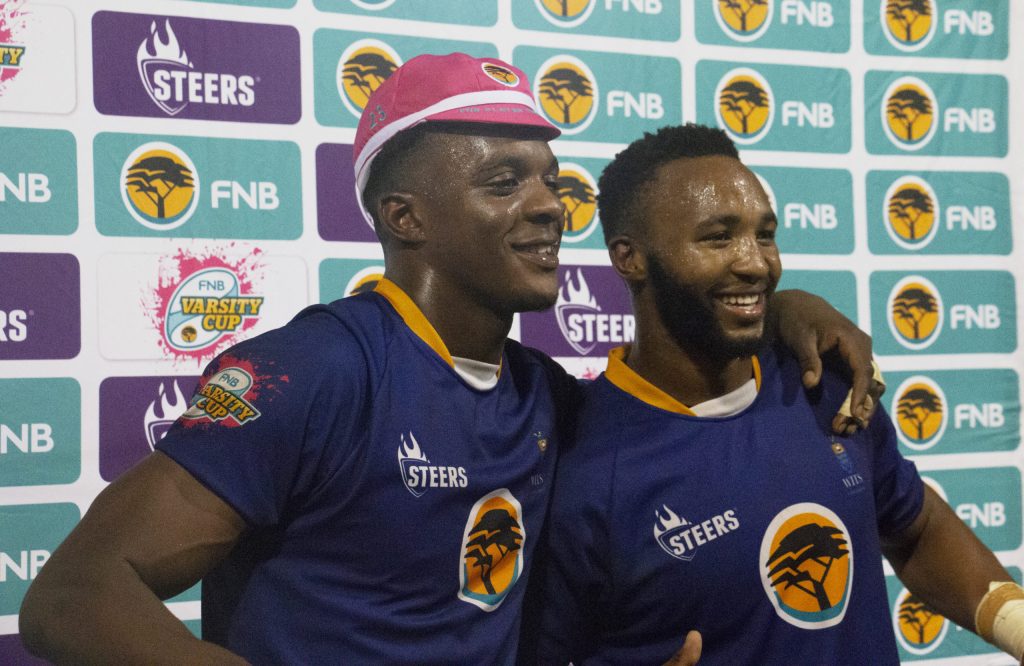
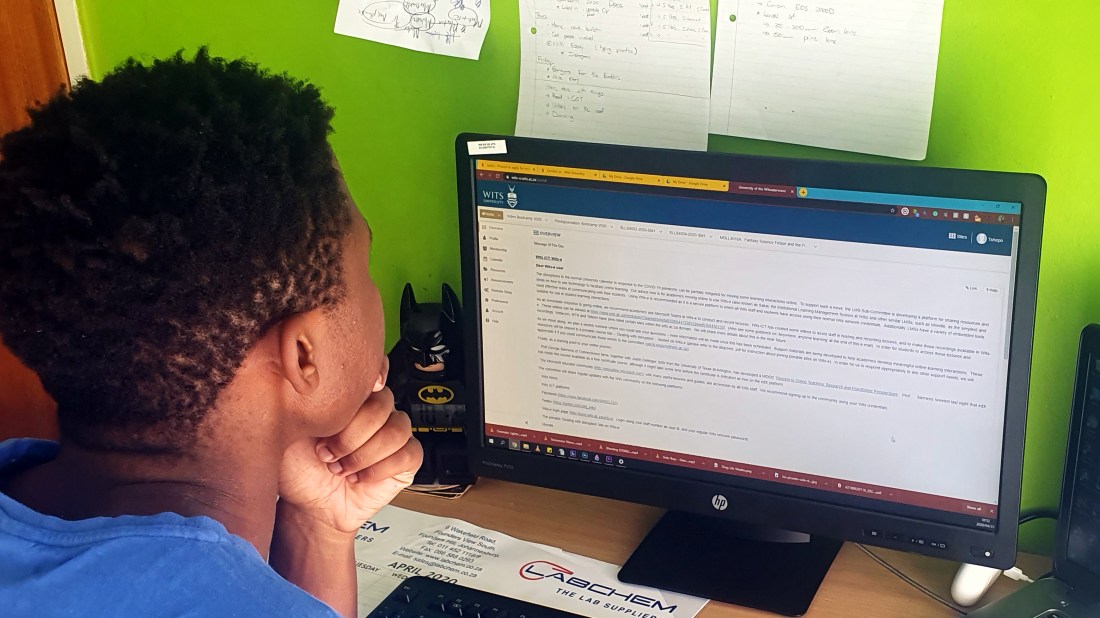
The Jimmy’s in the Matrix on Wits East Campus opening for business in the morning.A Wits student navigates the Wits-e website where online learning is taking place.Bidvest Wits Winger Terrence Dzvukamanja meets a cross with a header to make it 1 – 0 against Black Leopards at Bidvest stadium on Tuesday March 10.Man of the match, Emmanuel Tshituka smiles for a photo with man of the moment, Lindokuhle Ncusane. Both players are part of FNB Wits.Benefactor Mokoena representing the Wits Ultimate Frisbee team at the South African Nationals tournament in 2019.
Although “the University will move heaven and earth to complete the academic year,” some students still experience challenges with online learning.
On Monday 20 April 2020, the University of the Witwatersrand commenced online teaching and learning to maximise the academic year in light of the COVID-19 pandemic.
Lectures have been working to create various online resources for students. The resources have been posted on the Wits online learning platform Sakai, which is now a zero-rate site, allowing students to access it at no data cost.
Professor Anne Fitchett, a lecturer in the School of Civil and Environmental Engineering, told Wits Vuvuzela that lecturers received teaching ideas from Wits ICT (Information and Communication Technologies) and CLTD (Centre for Learning and Teaching Development). These ideas are lectures supplemented with narrated slides, Chat Rooms to take questions from the class and forums for tutorials all offered on Sakai.
Students’ reception of the online learning method are mixed. Although as Ntokozo Dhlamini (21), a third-year studying Education, says “I commend lectures for making the lectures as interactive as they can with the narrated slides,” there are still various challenges that face the Online teaching and learning experience.
“It is a bit impersonal; difficult to identify students at risk who don’t come forward with their problems” says Fitchett. These sentiments are echoed by first-year BA General student, Michaela Scholtz who bemoans the fact that “We cannot have tutorials. Talking to others is a very easy way to learn.”
While the Chat Rooms and Forums are created for this very reason, some students like Tshimangadzo Mpilo (22), in his second year of BSc Biological Science says he hasn’t received his 30 GB of Data from Wits and is on his last gig of data 2 days into term (at the time of the interview).
Others like 21-year old Lish Marimane, in her third year of BCom Accounting, struggle with internet access even after receiving the 30 GB from Wits. “Network is bad in Utah (a village in Mpumalanga). When the electricity is out there is no network and the only place to get a decent connection is under a [specific] tree.”
With that said, students are ready to do whatever it takes to complete the academic year. As Dhlamini puts it “The University made it clear that they’ll move heaven and earth to complete the academic year. We as students need to manage our time for the sake of the academic year”
FEATURED IMAGE: A Wits student navigates the Wits-e website where online learning is taking place. Photo: Tshepo Thaela










 Tshepo's News Portfolio